Amazon Reseller Revenue Leak Calculator
Introduction
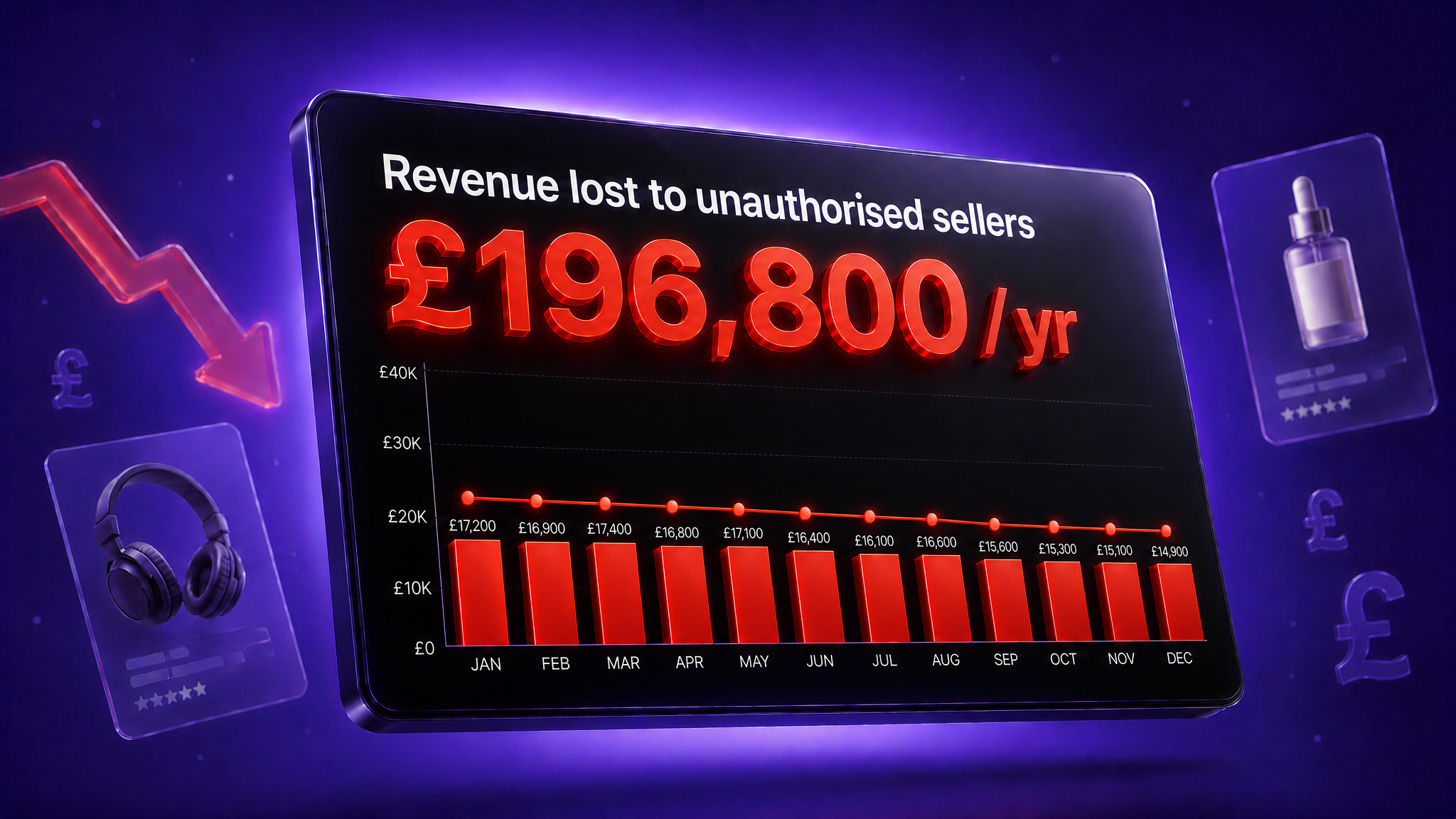
If you have unauthorised resellers on Amazon they are costing your brand, some effects are visible immediately and some will show slowly over time. This revenue calculator paints a clear financial picture of just how much revenue and profit you are currently losing. Once you see the size of the problem it will give your brand the push it needs to start prioritising this issue.
Why Unauthorised Resellers Are Bad for Your Brand
Most established brands are losing money to unauthorised resellers they don’t know even exist.
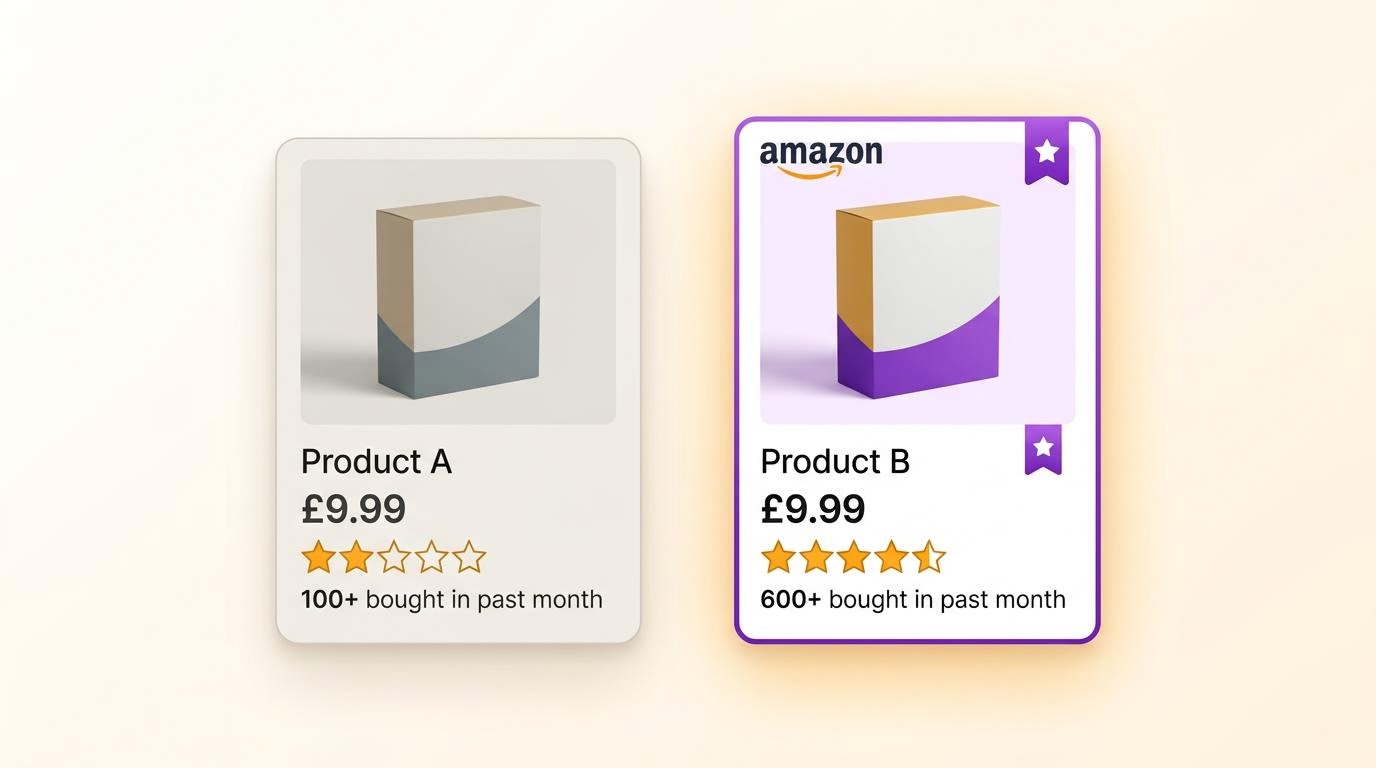
Your products are being sold on listings you haven't authorised, at prices that undercut your retail and marketplace partners, by sellers using fulfilment methods you have no visibility over.
This is a problem for your brand because there is no real ownership over your Amazon channel, and resellers are only incentivised by short-term profits; they have no need to improve listings or keep customer retention for future purchases.
How Resellers are Buying Your Products
It starts further back in your supply chain than you'd expect. A wholesaler moves more stock than anticipated and sells the surplus on. A distributor offloads excess inventory to a clearance buyer. A retail arbitrage seller picks your product off a supermarket shelf and relists it online. An importer moves stock between regions and sells it domestically at a discount.
None of them need your authorisation, none of them are bound by your pricing. By the time the listing appears on Amazon, the stock is already in circulation, with no straightforward way to pull it back.
You never authorised any of it, yet it's happening right now on your listings.
The Calculator
Most brands have no idea because they've never calculated it. The number is almost always larger than expected.
We built a free calculator that puts a real figure on it. Monthly revenue lost, annual revenue lost, and margin impact, all based on your actual numbers.
Adjust the sliders for your monthly units, RRP, how far below your price resellers are selling, and what share of sales they're capturing. Most brands that use it find something they weren't expecting.
Why This Keeps Happening
Reseller activity rarely appears out of nowhere. In most cases it's the result of the same underlying gap, no Amazon-specific plan. Having a retail, D2C or wholesale strategy doesn't transfer to Amazon, as an open marketplace Amazon requires its own dedicated approach.
Without a clear approach to the marketplace, the defaults take over. No MAP policy with teeth. No Brand Registry enforcement. No monitoring to catch new resellers before they establish themselves.
With a dedicated pricing strategy as well as listing ownership and active brand protection in place, your brand presents consistently across every touchpoint, these are the brands that convert at much higher rates.
How Ecomlift Can Help
Ecomlift uses a number of strategies to remove unauthorised sellers and regain control of Amazon channels. This is often one of the first steps when partnering with an established brand. Before scaling sales, it is important to portray a well-optimised listing to the customer, the same as on a brand's own website.
Unauthorised sellers are just one problem causing your brand to leak revenue on Amazon. Losing sales from poor listing titles, bad-quality images and out-of-stock periods are just as important.
Although these are slightly harder to see and implement, they contribute just as much.
Ecomlift combines e-commerce expertise with software to help implement strategies across all aspects of a brand's Amazon channel, resulting in better performance and a better consumer experience.
You can read more about our partnership model here.
Conclusion
Most brands that run the numbers above find a figure larger than they expected. Reseller revenue loss builds slowly and quietly, which is exactly why it goes unaddressed for so long.
But knowing the number is only half the job, a figure in a calculator changes nothing on its own. The resellers are still there, still undercutting your price, still capturing sales that should be yours.
Getting them off your listings, and keeping them off, requires the right controls in place. Brand Registry, MAP enforcement and a single authorised seller are the levers that move the needle. Without them, new resellers will keep appearing.
Frequently asked questions
How do I find out what share of my sales are going through resellers?
Monitor your Buy Box ownership over one to two weeks, check at different times of day and note how often a third-party seller holds it rather than you. Third-party Amazon analytics tools track this automatically, which gives a more reliable figure.
Can I remove unauthorised sellers from my Amazon listings myself?
Yes, Amazon Brand Registry gives you reporting tools to flag unauthorised sellers directly. The process can be slow and a removed seller may reappear under a different account, which is why ongoing monitoring matters more than a one-off clean-up.
Why do unauthorised sellers keep reappearing after being removed?
Because removing a seller from Amazon doesn't address how they acquired your stock in the first place. Without tightening your distribution agreements and channel controls, new resellers will continue to appear.
What is the most effective long-term solution to reseller activity?
Consolidating to a single authorised seller of record on Amazon, one entity controls the listing, pricing and fulfilment entirely. Combined with Brand Registry and a documented MAP policy, this removes the issue at its root rather than managing resellers reactively.
How accurate is the reseller revenue calculator?
It produces an answer based on the figures you enter, not an audit of your actual account. The real figure for your brand could be higher or lower, but for most established brands it's close enough to indicate whether the problem is worth addressing.
SIGN UP TO OUR
NEWSLETTER
Subscribe to the Sell Smarter newsletter to get weekly e-commerce insights, Amazon best practices and exclusive tips from our expert team. Delivered straight to your inbox.