How to Enforce MAP Pricing on Amazon as a Brand
Introduction
A Minimum Advertised Price (MAP) policy is one of the simplest tools available to brands trying to protect their pricing on Amazon — and one of the most commonly set up incorrectly, or not enforced at all once it exists. A MAP pricing policy that exists only on paper, with no monitoring or consequences attached, doesn't actually stop anyone from undercutting your price. This article covers what MAP policies can and can't do on Amazon, how to set one up properly, and what real enforcement actually looks like in practice.
What we'll cover:
- What a MAP policy actually is (and isn't)
- Why pricing instability happens even with a MAP policy in place
- A real example of MAP enforcement failing
- How to write a MAP policy that's actually enforceable
- Monitoring and catching violations
- What enforcement looks like in practice
What a MAP policy actually is (and isn't)
MAP stands for Minimum Advertised Price — the lowest price a retailer or distributor is permitted to advertise your product at publicly. Importantly, MAP governs advertised price, not the price charged at checkout in all cases, and it cannot legally dictate what a retailer actually sells the product for (this would be considered illegal price-fixing in most jurisdictions). What it can do is give you grounds to stop working with a distributor or retailer who breaches the advertised price threshold you've set.
This distinction matters because a MAP policy is a contractual tool, not an enforcement mechanism by itself. It only works if it's written into agreements and someone is actually checking for violations.
Why pricing instability happens even with a MAP policy in place
Several common gaps undermine an otherwise reasonable MAP policy:
- The policy was never actually signed into formal distribution agreements, so it has no legal weight
- It exists for direct distributors but says nothing about what happens if their stock ends up with a third party
- Nobody is actively monitoring Amazon listings to catch violations
- Violations are noticed but never followed up on, signalling there are no real consequences
A real example of MAP enforcement failing
A health and beauty brand had a MAP policy in place covering its three UK distributors. The policy was well-written — it specified the minimum price, included financial penalties for violations, and covered all sales channels including Amazon.
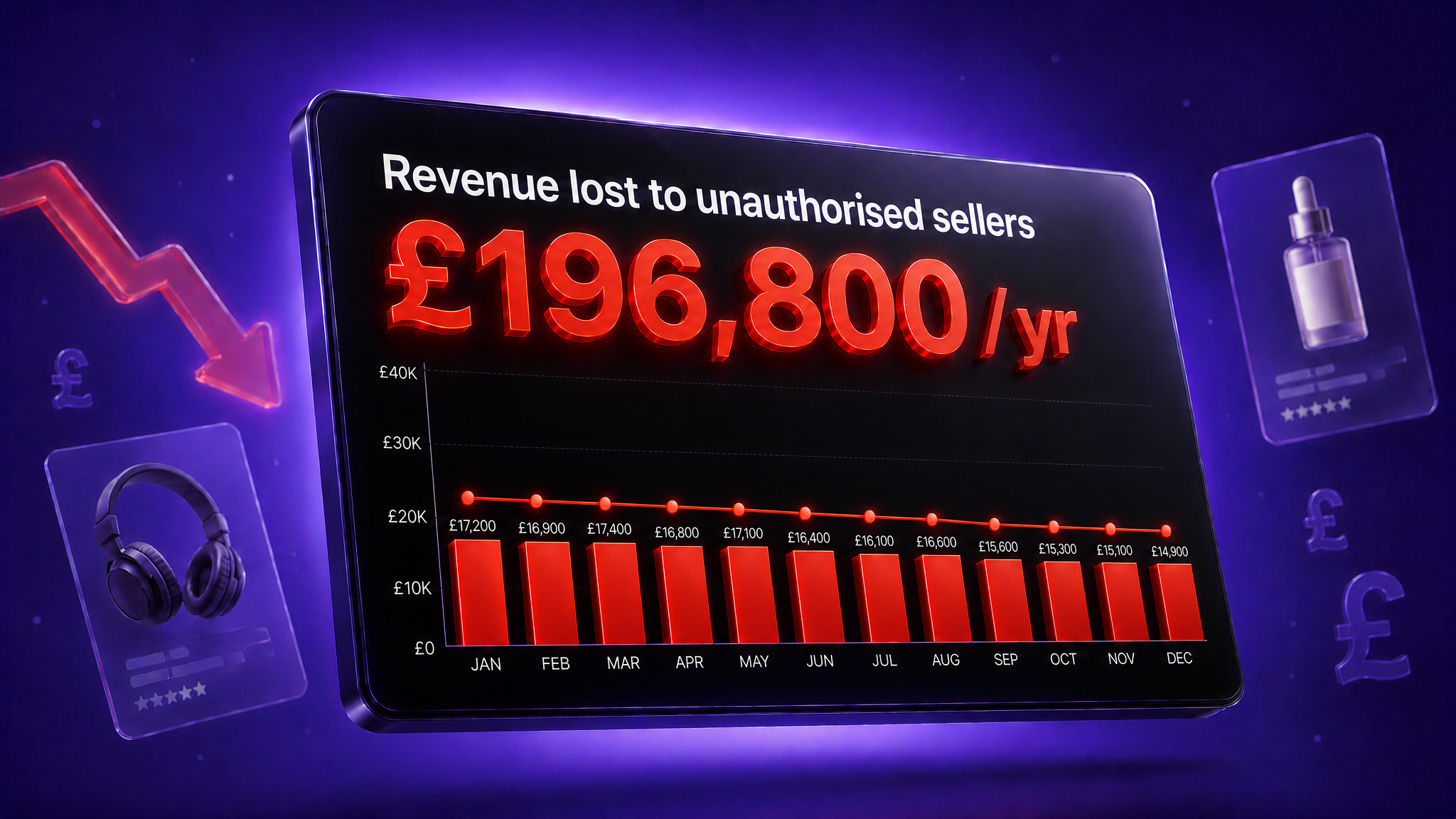
Six months after putting it in place, the brand's RRP was being undercut by 18% on Amazon. The source wasn't one of their three distributors — it was a fourth party who had purchased excess stock from one of the distributors and relisted it independently. Because the MAP policy didn't include a clause requiring distributors to flow MAP terms down to any sub-distributors or resellers they sold to, the brand had no contractual recourse against the source of the problem.
The lesson: a MAP policy is only as comprehensive as its weakest distribution link.
How to write a MAP policy that's actually enforceable on Amazon
A workable MAP policy typically includes:
- A clearly stated minimum advertised price for each product or product line
- The specific consequence for a violation (e.g. suspension of distribution rights, financial penalty)
- A defined process for how violations are identified and reported
- Geographic and marketplace scope — explicitly covering all Amazon marketplaces, not just the brand's home region
- A requirement that distributors flow these terms down to any sub-distributors or retail partners they work with
This needs to be incorporated directly into signed distribution agreements, not sent as an informal email or policy document with no contractual standing.
Monitoring and catching MAP violations on Amazon
Manual monitoring means periodically checking your own listings and any known distributor or reseller storefronts for pricing below your stated MAP. Several price-tracking tools can automate this, alerting you when a tracked listing drops below a threshold you set.
The key operational question is: who is actually doing this, how often, and what happens with the information once a violation is found? A monitoring process with no follow-through has the same effect as no monitoring at all.
What MAP enforcement looks like in practice
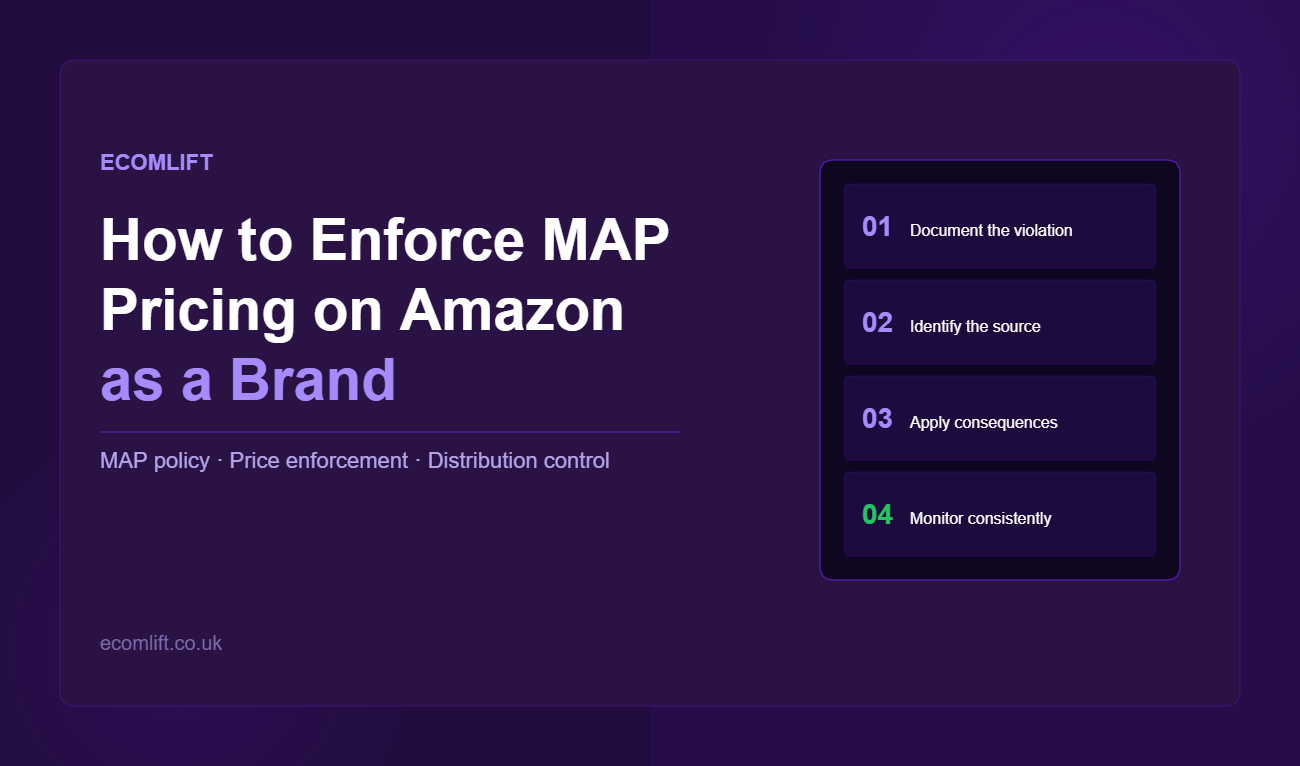
When a violation is identified:
- Document it — screenshot the price, date, and seller/listing details
- Identify the source — is this your authorised distributor, or has the stock been resold by a third party outside your agreements?
- If it's a direct distributor, apply the consequence stated in your MAP policy — this needs to actually happen to have credibility for future violations
- If it's an unauthorised third party, this becomes a reseller control issue rather than a MAP breach, and is typically addressed through Amazon's Brand Registry reporting tools instead
Enforcement that's applied inconsistently — strict with one distributor, ignored with another — tends to undermine the policy's credibility across your entire distribution network.
At Ecomlift, we help established brands take back control of their Amazon channel, from pricing strategy and MAP enforcement to listings and advertising, so you can protect your margins and build a stronger, more stable presence on the marketplace.
Frequently asked questions
Does MAP apply to marketplaces outside Amazon too?
It can, if your policy is written to cover all sales channels rather than Amazon specifically. Many brands choose to apply MAP consistently across every channel to avoid undermining their own pricing strategy elsewhere.
What happens if a distributor repeatedly violates MAP?
This depends on what your policy states, but common consequences include warnings, financial penalties, or termination of the distribution agreement for repeat or serious violations.
Is MAP enough to stop unauthorised resellers?
Not on its own. MAP works through your direct distribution agreements — it has no contractual hold over an unrelated third party who acquired your stock independently and is reselling it.
What's the difference between MAP and RRP?
RRP (Recommended Retail Price) is a suggested selling price — retailers are free to sell above or below it. MAP is a contractual minimum below which authorised partners agree not to advertise. MAP has legal and contractual teeth; RRP is advisory only.
How do I monitor for MAP violations on Amazon?
The most accessible approach is manual — check your listings regularly and note any pricing below your MAP threshold. Several third-party tools (such as price monitoring software) can automate this and send alerts when a tracked listing drops below your set price, which is more practical at scale.
Can Amazon itself violate my MAP policy?
Amazon is not your distributor — they are a marketplace, not a party to your MAP agreements. If Amazon drops the price of your product through their own retail operations (if you sell to them directly via Vendor Central), your MAP policy does not apply to them. This is a common misunderstanding.
How do I set the right MAP price?
MAP should be set at a level that protects your margin and brand positioning without creating an incentive for retailers to simply not stock your product. A common approach is to set MAP at or near your standard retail price, allowing enough margin for retailers to operate profitably while maintaining a floor beneath which pricing cannot go.
SIGN UP TO OUR
NEWSLETTER
Subscribe to the Sell Smarter newsletter to get weekly e-commerce insights, Amazon best practices and exclusive tips from our expert team. Delivered straight to your inbox.