Signs Your Amazon Channel Needs a New Approach
Introduction
Most brands don't wake up one day and decide their Amazon channel isn't working. It tends to be a slow accumulation of small frustrations — a price that keeps fluctuating, a listing that hasn't been touched in over a year, an advertising account nobody's quite sure is profitable — none of which feels urgent enough on its own to address, until the combined effect shows up in the numbers. This article is a practical checklist to help you assess whether your Amazon channel management needs attention — and what good looks like by comparison.
What we'll cover:
- The warning signs worth taking seriously
- A real example of how multiple small problems compound
- Why these problems tend to reinforce each other
- How to assess your own channel honestly
- What good Amazon channel management looks like
- Deciding what to do next
The warning signs worth taking seriously
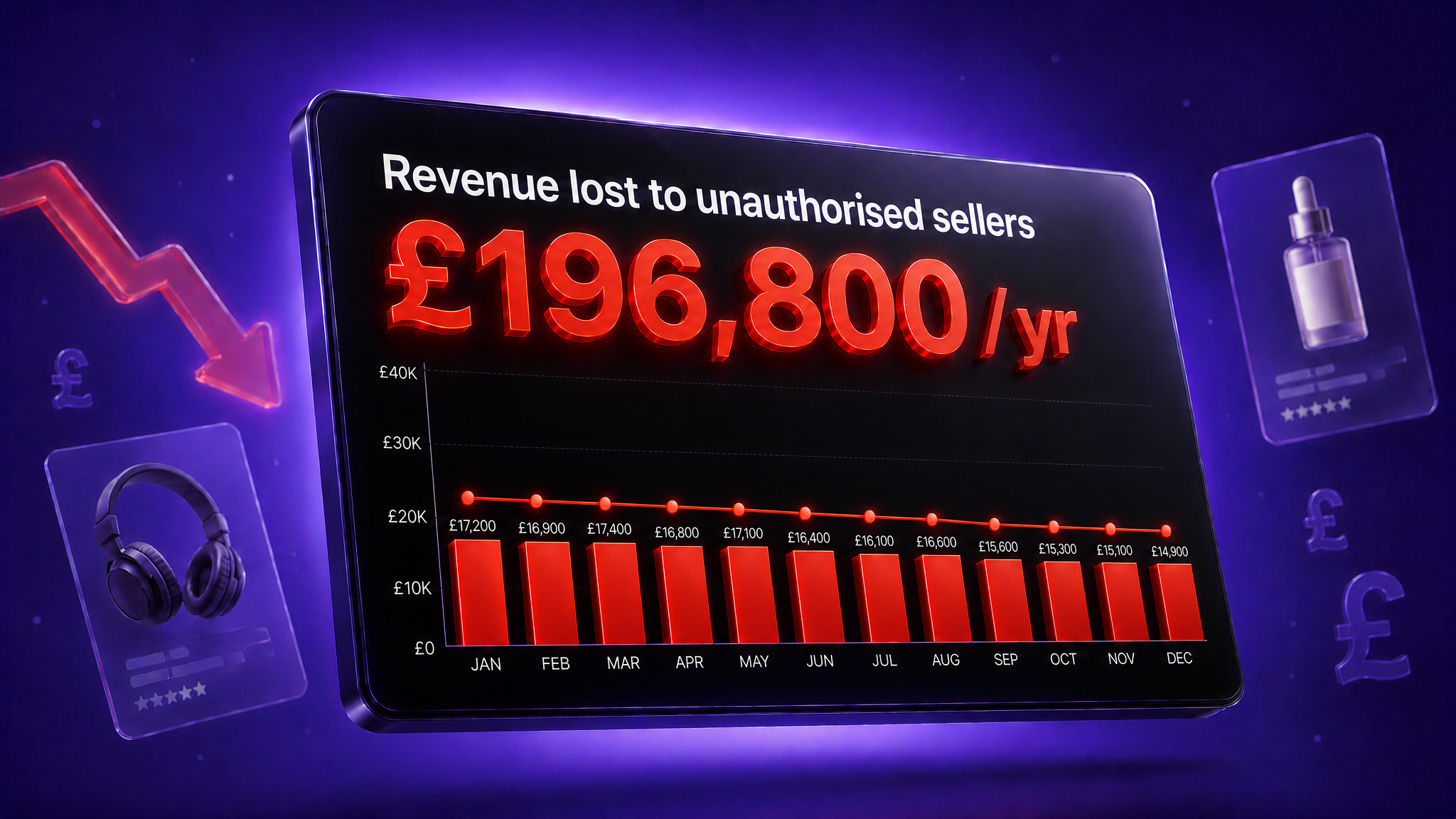
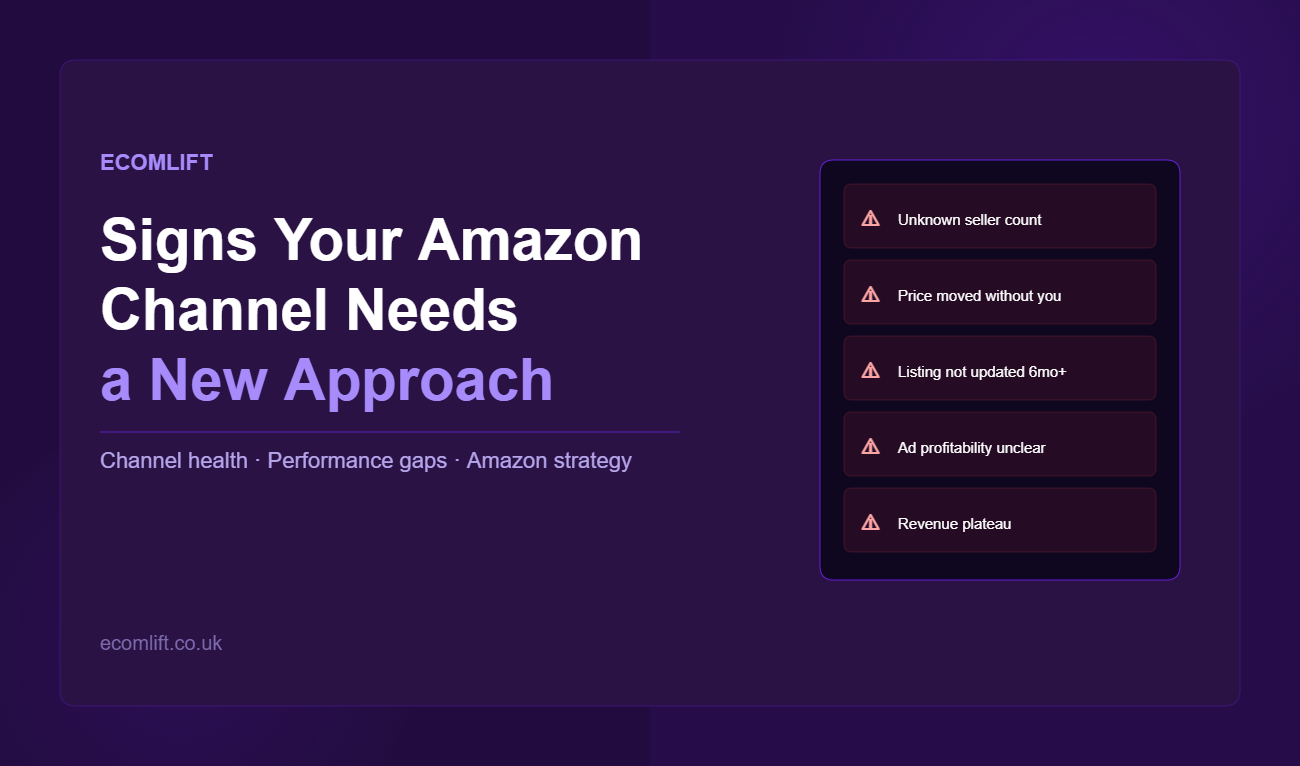
Nobody can tell you, with confidence, how many sellers are on your main listings. If this number is unknown, it's very likely not zero — and if it's not zero, your pricing and Buy Box are probably not fully under your control.
Your price has moved in the last 90 days and you didn't decide that. Pricing should be something you control, not something that happens to you. Unexplained price movement almost always traces back to reseller activity or a distribution gap.
Your last meaningful listing update was over six months ago. Amazon's competitive bar — images, A+ Content, keyword coverage — tends to rise over time. Standing still often means falling behind in relative terms even if nothing has obviously broken.
You're running advertising but couldn't say whether it's actually profitable. If TACoS, ACoS, or basic margin math isn't being tracked, spend is happening somewhat blind. A channel that runs ads without knowing the return is potentially losing money every day without knowing it.
Amazon revenue has plateaued while your other channels have grown. This is one of the clearest practical signals that something channel-specific, rather than market-wide, is holding the account back.
Whoever manages Amazon internally also manages several other things. This isn't a criticism of the person — it's a structural issue. A channel that requires daily attention rarely gets it when it's the fourth priority on someone's list.
A real example of how multiple problems compound
A health supplement brand had been selling on Amazon for three years. Revenue was flat, but not declining, so nobody investigated. When a proper audit was run, what emerged was a picture of several interconnected problems: four unauthorised resellers had entered the listing over the previous 18 months, one pricing 22% below RRP. The Buy Box had been changing hands unpredictably, making their advertising increasingly inefficient. Their listing title was missing two high-volume search terms worth over 40,000 monthly searches combined. Their A+ Content had never been updated since launch.
None of these problems was immediately catastrophic on its own. Together, they explained why a growing brand category had produced flat Amazon revenue for three years. The fix wasn't dramatic — it was methodical — but it required someone to actually look at the channel in detail first.
Why these problems tend to compound rather than stay isolated
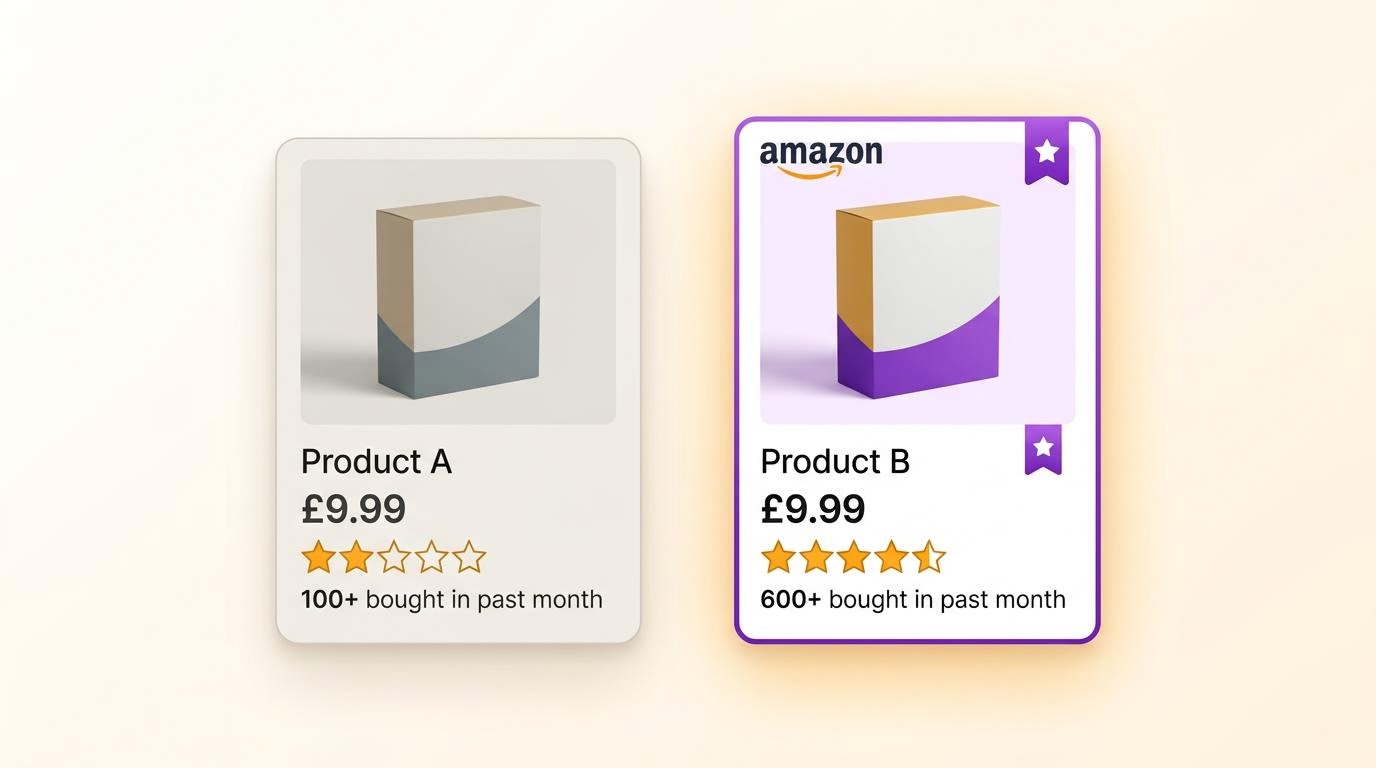
Each of the issues above sounds containable in isolation. In practice, they reinforce each other: a volatile Buy Box undermines pricing confidence, which discourages investment in advertising, which means weaker visibility, which means even small reseller activity has an outsized relative impact on a smaller pool of sales. By the time the combined effect becomes visible in revenue, several of the underlying causes have usually been present for a while.
How to assess your own Amazon channel honestly
A useful exercise: imagine handing your Amazon account to a stranger with no context, and ask what they'd notice in the first ten minutes. Would they immediately spot multiple sellers on your main listing? Outdated images compared to competitors? An advertising account with no clear structure? This kind of honest, slightly detached review tends to surface things that get missed when you're looking at the same account every day.
What good Amazon channel management looks like
A well-run Amazon channel typically has: a single, controlled seller of record (or a clearly managed and monitored set of authorised sellers), pricing that moves only when the brand decides it should, listings refreshed and benchmarked against competitors at least quarterly, and advertising spend tracked against clear profitability metrics rather than vanity numbers like raw sales volume.
Deciding what to do next
If several of the signs above feel familiar, the next useful step usually isn't a major decision — it's getting a clear, honest picture of exactly where things stand right now. That's typically more valuable than guessing at the scale of the problem or assuming it's too late to fix.
At Ecomlift, we help established brands take back control of their Amazon channel, from reseller management and pricing control to listings and advertising, so you can protect your margins and build a stronger, more stable presence on the marketplace.
Frequently asked questions
Is it normal for an Amazon channel to need this much attention?
Yes — Amazon is a genuinely active marketplace, and channels that receive consistent attention tend to outperform those treated as a "set and forget" sales channel. The brands that grow consistently on Amazon are almost always the ones with someone looking at the channel regularly, not quarterly.
How do I know if my Amazon problems are urgent or just minor inefficiencies?
A reasonable rule of thumb: if a problem affects pricing, Buy Box control, or brand trust, it's worth treating as urgent. Smaller optimisation gaps (like an underused A+ Content slot) are real but less time-sensitive.
Can these issues be fixed without a major overhaul?
Often, yes — many of these problems are addressed through consistent, ongoing management rather than a single dramatic intervention. The exception is reseller fragmentation, which usually requires a structural change (MAP enforcement, distribution agreement tightening, or consolidating to a single seller) rather than just operational improvements.
Is a plateaued Amazon channel always a sign of a bigger problem?
Not always — market conditions and category-specific dynamics matter too. But a plateau while other channels grow is worth investigating rather than assuming away.
How long does it take to see results after fixing these issues?
It depends on the fix. Listing optimisation (title, images, A+ Content) typically shows results within 2–4 weeks as Amazon re-indexes the content and shoppers begin responding to the improved listing. Reseller control takes longer — often 2–3 months to fully stabilise pricing and Buy Box ownership. Advertising improvements can show results within days once a search term report is acted on.
What's the difference between a channel that's underperforming and one that's just in a difficult market?
A difficult market affects all sellers in a category — BSR trends across competitors will show similar declines. An underperforming channel shows weakness relative to the category: your BSR falling while competitors hold steady, or your sales flat while category-level data shows growth. Amazon's Brand Analytics data (available with Brand Registry) is the clearest way to distinguish between the two.
Should I audit my Amazon channel myself or get a professional to do it?
Both have merit. A self-audit using the checklist in this article is a good starting point and costs nothing. A professional audit (either from an Amazon specialist or a brand partner like Ecomlift) will typically surface issues that aren't visible from a basic listing review — particularly around advertising structure, keyword coverage, and the full picture of reseller activity across all your ASINs.
SIGN UP TO OUR
NEWSLETTER
Subscribe to the Sell Smarter newsletter to get weekly e-commerce insights, Amazon best practices and exclusive tips from our expert team. Delivered straight to your inbox.