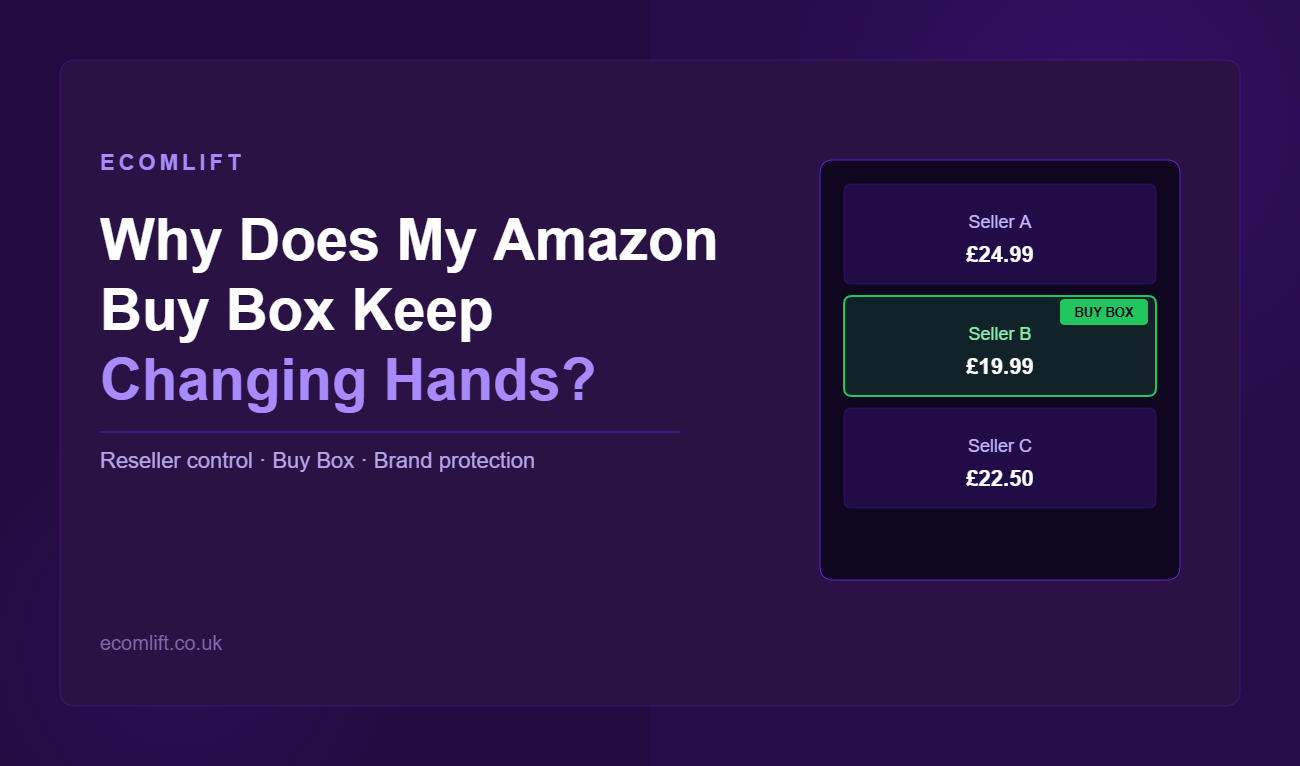
Why Does My Amazon Buy Box Keep Changing Hands?
Introduction
If you've noticed your Amazon Buy Box flipping between sellers — sometimes you, sometimes someone else, sometimes a name you don't even recognise — you're not imagining it, and you're not alone. Amazon Buy Box volatility is one of the most common and most damaging issues established brands face on the marketplace, and it's rarely talked about until it's already cost a brand real revenue. The Buy Box might look like a small detail on the product page, but it quietly controls who actually gets the sale every time a customer clicks "Buy Now." When it's unstable, the knock-on effects touch your pricing, your advertising, and ultimately how much control you have over your own brand on Amazon.
What we'll cover:
- What the Buy Box is and why it matters more than it looks
- Why the Amazon Buy Box changes hands between sellers in the first place
- The hidden costs of a volatile Buy Box — beyond the obvious
- A real-world example of how this plays out
- How to check if this is happening to your listings right now
- What can actually be done to fix it
What is the Amazon Buy Box, and why does it matter?
The Buy Box is the "Add to Cart" and "Buy Now" button on an Amazon product page. When multiple sellers list the same product — the same listing, same ASIN — only one of them holds the Buy Box at any given moment, and that's the seller who gets the vast majority of sales.
Research consistently shows that over 80% of Amazon sales go through the Buy Box rather than through a seller's individual offer page. If you're not winning it, you're effectively invisible to most shoppers, even if your product is technically still listed.
Why does the Amazon Buy Box change hands?
Amazon's algorithm reassigns the Buy Box based on a combination of factors, including:
- Price — the seller offering the most competitive landed price (price plus shipping) is favoured
- Seller performance metrics — order defect rate, late shipment rate, valid tracking rate
- Fulfilment method — Fulfilled by Amazon (FBA) offers are generally favoured over self-fulfilled ones
- Stock availability — a seller who's out of stock cannot hold the Buy Box, even temporarily
- Account history and seller rating
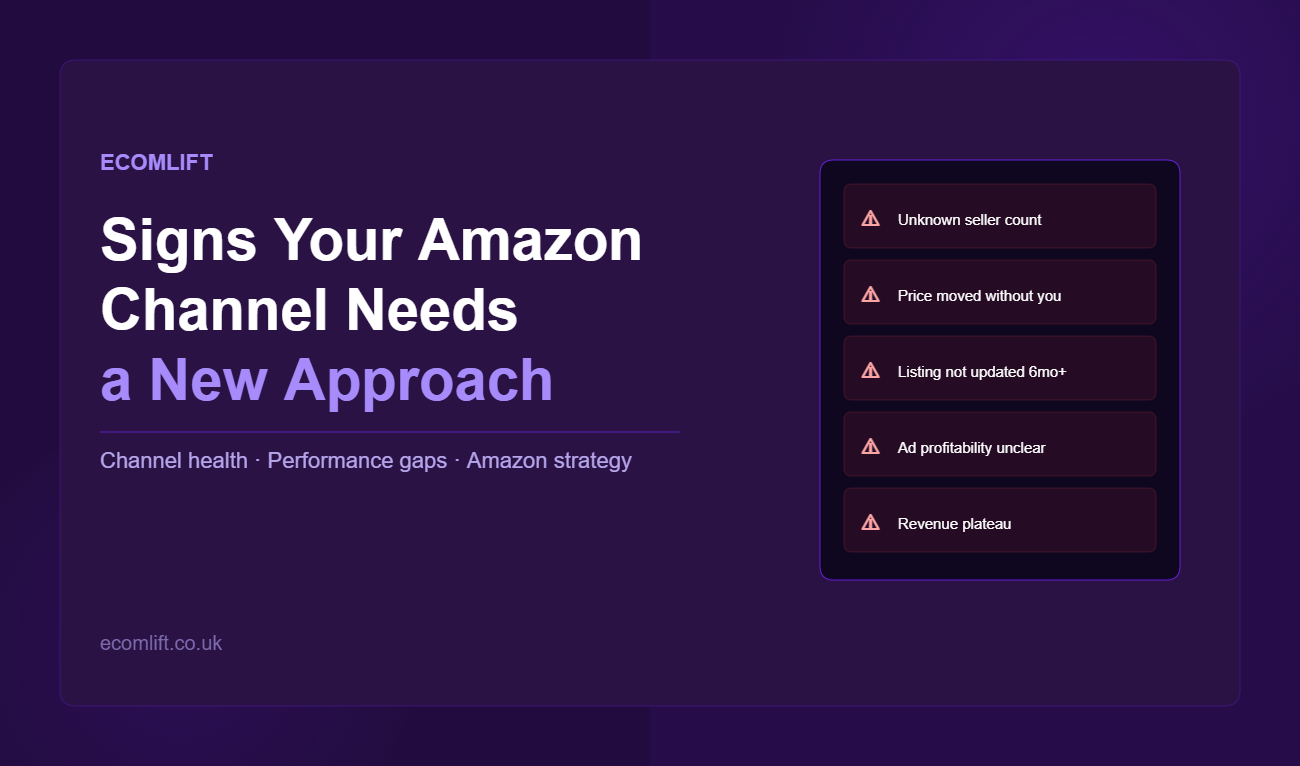
When more than one seller is listing your product — whether that's an authorised distributor, an unauthorised reseller, or someone who simply bought your stock from a retailer and relisted it — they're all competing for that single Buy Box slot using these same factors. If one of them drops their price, ships faster, or simply has better account metrics that week, the Buy Box moves to them.
Why this is a bigger problem than it first appears
It's tempting to think of a flipping Buy Box as a minor technical quirk. In practice, it tends to compound into several connected problems:
Your pricing becomes someone else's decision. If a reseller undercuts your RRP to win the Buy Box, your own price now appears unstable across the marketplace — even though you didn't change anything.
Your advertising budget can fund someone else's sales. If you're running Sponsored Products ads on a listing and a different seller is holding the Buy Box when a shopper clicks through, your ad spend can end up driving a sale for them, not you.
Brand trust erodes. Shoppers don't know or care which "seller" fulfilled their order — they associate the experience with your brand. If a reseller is shipping slowly, using poor packaging, or unable to handle returns properly, that reflects on you.
It signals a deeper control problem. A volatile Buy Box is often the most visible symptom of a brand that doesn't have full control over who is allowed to sell its products on Amazon in the first place.
A real-world example
Consider a health and beauty brand selling a £25 product through Amazon. They have Brand Registry, run Sponsored Products ads, and assume their channel is performing well. On closer inspection: seven third-party sellers are listing the same product, two of whom are pricing at £19.99 — 20% below RRP. These cheaper listings are winning the Buy Box roughly 60% of the time.
The result: the brand's own ads are driving traffic to listings they don't control, at a price they didn't set, fulfilled by sellers whose packaging and customer service they can't vouch for. Their advertising spend is directly subsidising a competitor's sale. This scenario is more common than most brand owners realise — and it's entirely invisible unless you go looking for it.
How to check if this is happening to you
You don't need expensive software to get a first read on this. On your own listing:
- Search your product on Amazon and open the listing
- Scroll to "Other Sellers on Amazon" (sometimes below the Buy Box, sometimes via a link)
- Note how many sellers are listed and what each is charging
- Check back over a few days — has the Buy Box holder changed? Has the price moved?
If you see multiple sellers, price movement you didn't authorise, or sellers you don't recognise as your own distributors, you likely have a reseller control issue worth investigating further.
What can actually be done about it
There are a few levers brands typically pull, in rough order of how much control they require:
Tighten distribution agreements. Many brands unknowingly create reseller chaos by selling wholesale without restricting where that stock can end up. Adding Amazon-specific resale restrictions to distributor agreements is a foundational (if slow) fix.
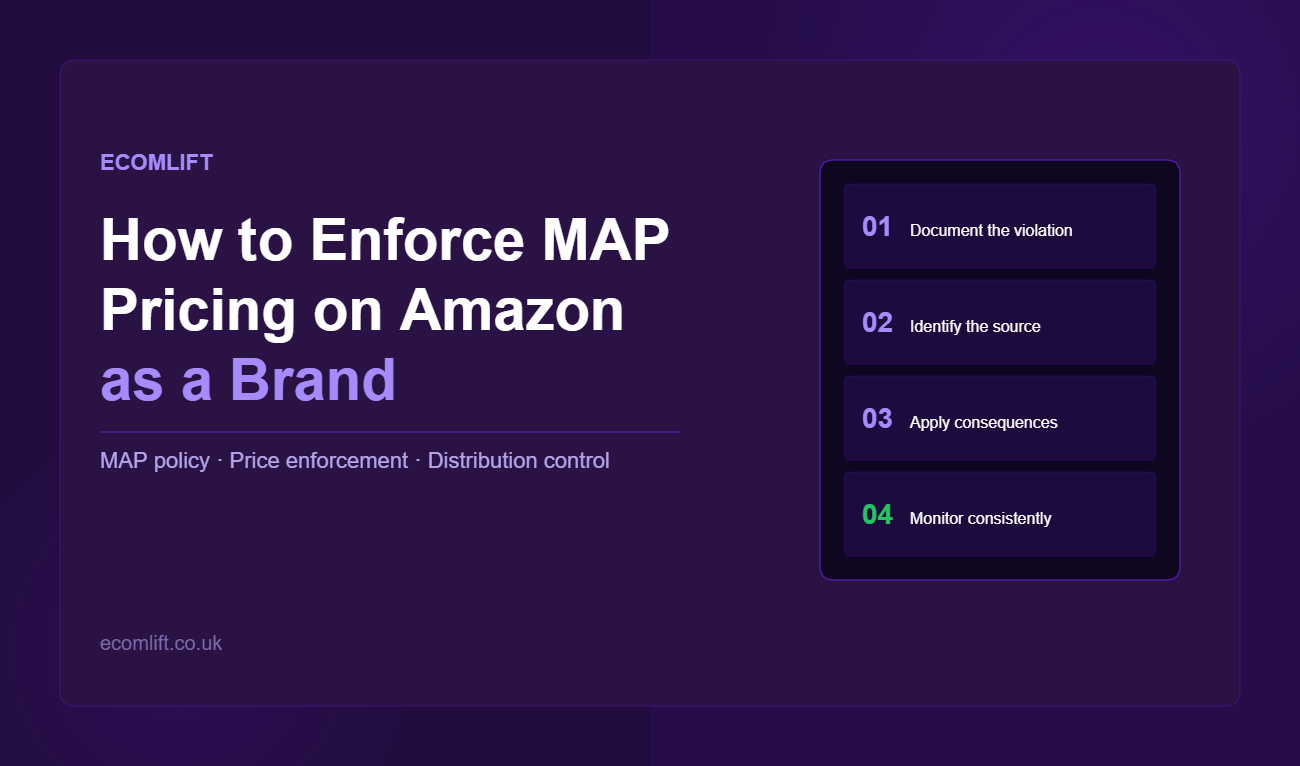
Enforce a MAP (Minimum Advertised Price) policy. A clear, documented MAP policy gives you grounds to report violations to Amazon and to distributors directly.
Apply for Amazon Brand Registry, if you haven't already. This gives you access to reporting tools and a level of listing control that unregistered brands don't have.
Report unauthorised sellers directly to Amazon through Seller Central or Brand Registry's reporting tools — though this is often a slow, manual, and ongoing process rather than a one-time fix.
Consolidate to a single, controlled seller of record. This is the most direct fix: rather than multiple parties listing the same product, one party — ideally with full alignment to the brand's pricing and positioning — controls the listing entirely. This removes the Buy Box competition at its root rather than managing it after the fact.
The honest trade-off
Reseller control on Amazon is rarely solved by a single action — it's an ongoing operational discipline, not a project with a finish line. Many brands find that the time and attention required to monitor sellers, chase MAP violations, and manage Brand Registry cases properly is more than their team has capacity for, especially when Amazon is one channel among several.
This is part of why some brands choose to bring in a dedicated partner to manage the channel as a single point of control — removing the reseller fragmentation rather than fighting it on an ongoing basis.
At Ecomlift, we help established brands take back control of their Amazon channel, from reseller management and pricing control to listings and advertising, so you can protect your margins and build a stronger, more stable presence on the marketplace.
Frequently asked questions
How many resellers on a listing is considered normal?
Even one unauthorised reseller can cause Buy Box instability. There's no universal "safe" number, but the more sellers competing for the same listing, the more frequently the Buy Box is likely to change hands.
Can I remove unauthorised sellers myself?
Yes, to an extent. Brand Registry gives you reporting tools to flag unauthorised sellers and counterfeit claims, but it's typically a slow, manual process rather than an instant fix.
Does losing the Buy Box mean I've lost the sale entirely?
Not always — some shoppers will click through to other offers — but over 80% of Amazon sales go through the Buy Box, so losing it consistently means losing the majority of your sales on that listing.
Will a MAP policy actually stop resellers from undercutting my price?
A MAP policy alone won't stop anyone, but it gives you a documented basis to enforce pricing with distributors and to report violations to Amazon with more credibility.
How does Amazon decide who wins the Buy Box?
Amazon's algorithm considers price, fulfilment method (FBA is favoured), seller performance metrics, stock availability, and account history. The lowest price doesn't automatically win — a seller with worse metrics may lose to a slightly higher-priced seller with better fulfilment and account standing.
Can I have exclusive Buy Box ownership as a brand?
Yes — if you are the sole seller on your listing, you will hold the Buy Box 100% of the time (assuming your account is in good standing). This is one of the main reasons brands choose to consolidate to a single seller of record rather than allowing multiple parties to list their products.
Does Buy Box volatility affect my Amazon advertising performance?
Directly, yes. If a competitor is holding the Buy Box when your ad drives a click, that shopper sees the competitor's offer at the checkout stage, not yours. Your ad spend has funded their sale. This is one of the most underappreciated costs of uncontrolled reseller activity.
SIGN UP TO OUR
NEWSLETTER
Subscribe to the Sell Smarter newsletter to get weekly e-commerce insights, Amazon best practices and exclusive tips from our expert team. Delivered straight to your inbox.